About Study Medicine

Built by medical students, for medical students.

A free study platform where every question, disease, drug and differential leads into the next, so an hour of practice turns into understanding, not just a score.

181K
questions answered
469
students studying
11
medical schools
4,400+
questions in the bank

The story

Made by students who sit the same exams.

The people who write and fix Study Medicine are medical students too, so the platform is shaped by what actually helps the night before an exam and the morning of a rotation.

  1. 01

    It started with one class.

    Study Medicine began at the University of British Columbia as a question bank for a single second-year class, written week by week so the questions matched what had just been taught.

  2. 02

    Students made it better.

    Every question shows how the class answered it, and anyone can flag an error in one tap. Flags and answer statistics are reviewed, and weak questions are rewritten or retired, so the bank gets better the more it is used.

  3. 03

    Then it grew past questions.

    Diseases, drugs, differentials, OSCE checklists and real clinical images were added and linked together, so a question leads to the disease, the disease to its drugs and differentials, and all of it back to practice.

  4. 04

    Now it is for every medical student.

    Questions can be studied by UBC curriculum week, by field of medicine, by Medical Council of Canada clinical presentation or by another school's blocks, on the web or the iPhone app. It is still free.
Inside

Ways to practise. One account.

MCQ practice

Questions that teach, not just test.

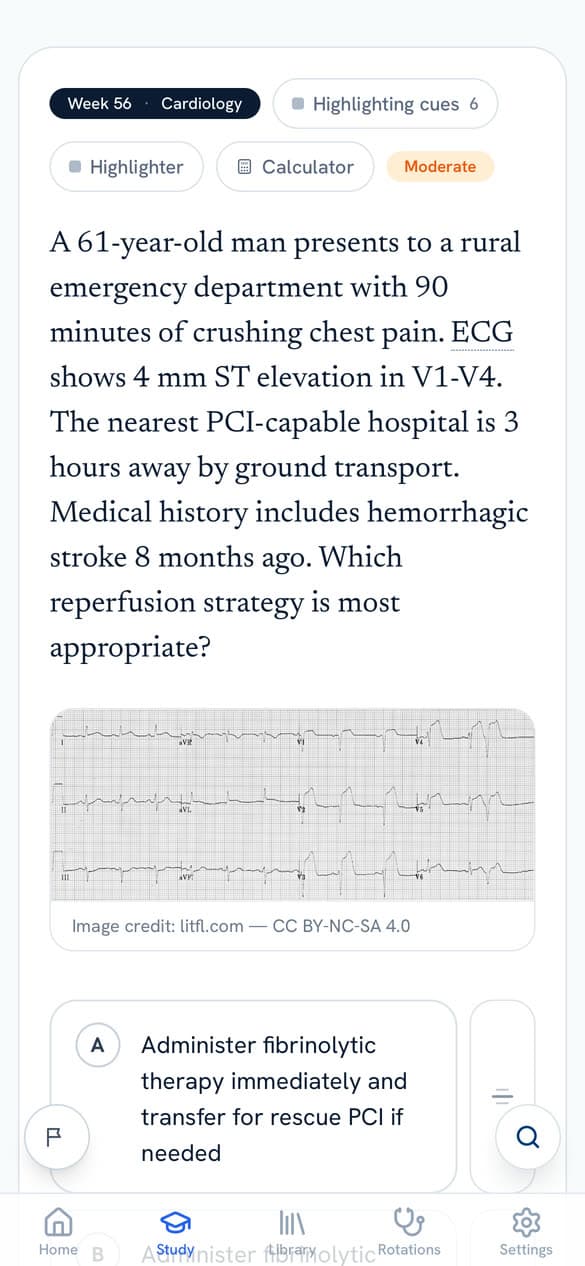
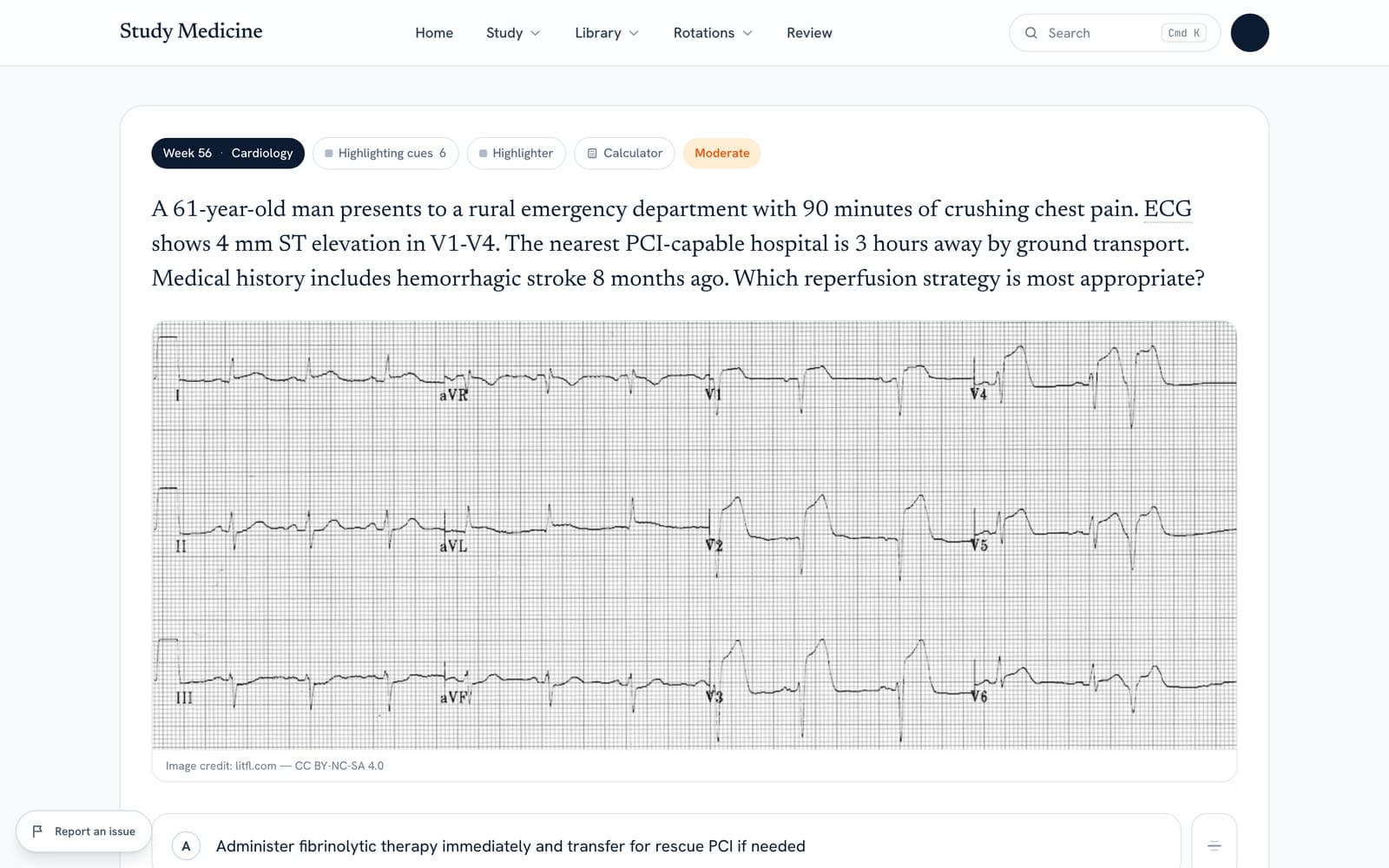
Over 4,400 clinical vignettes, each with an explanation for every option and a live breakdown of how other students answered.

An MCQ about reperfusion for an anterior STEMI, with the 12-lead ECG shown in the question

Everything linked

One search, every connection.

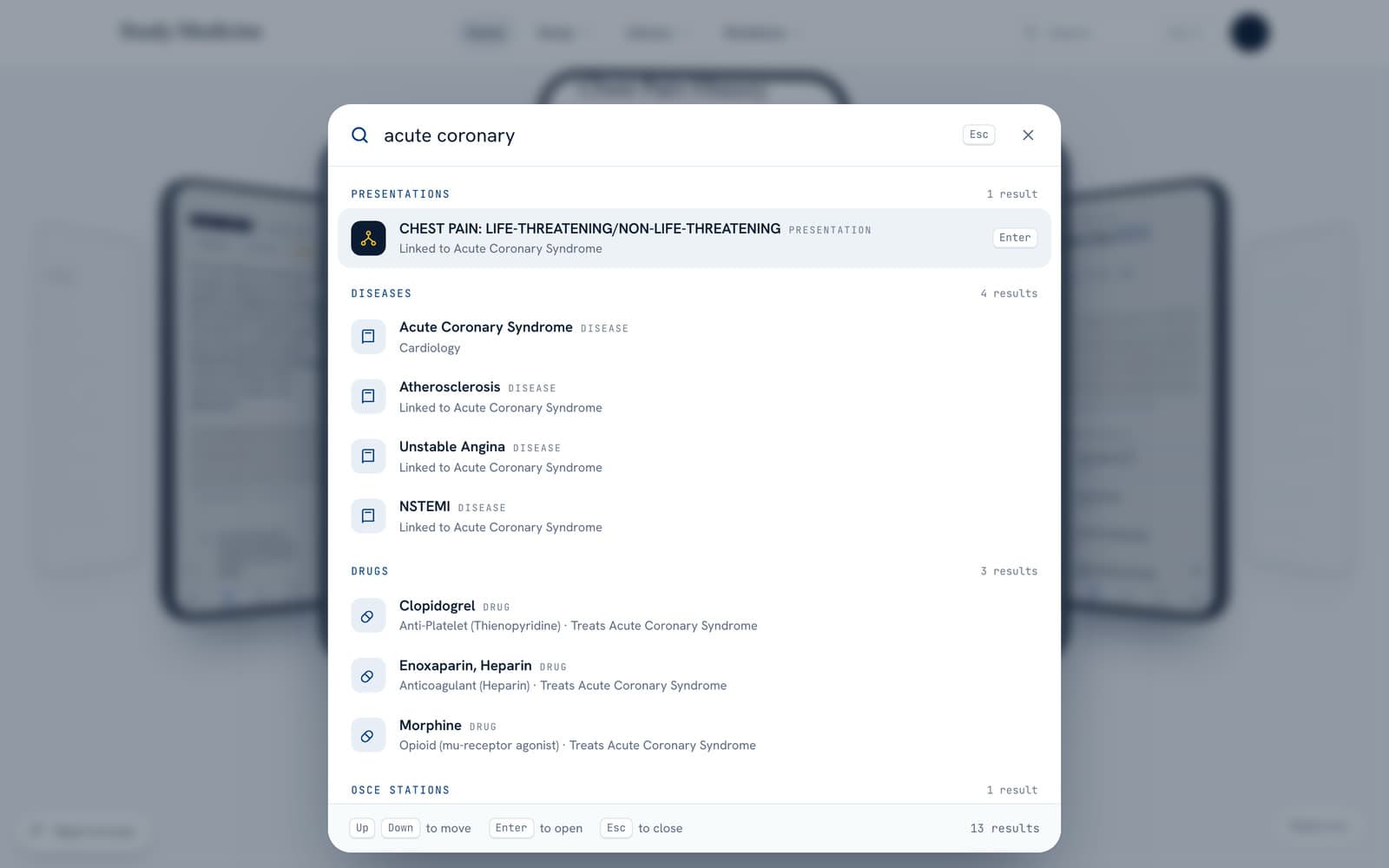
Search a condition and see the presentations it belongs to, the related diseases, the drugs that treat it and the OSCE stations that test it.

Search results for acute coronary syndrome listing linked presentations, diseases, drugs and OSCE stations

Disease library

Every condition, laid out the same way.

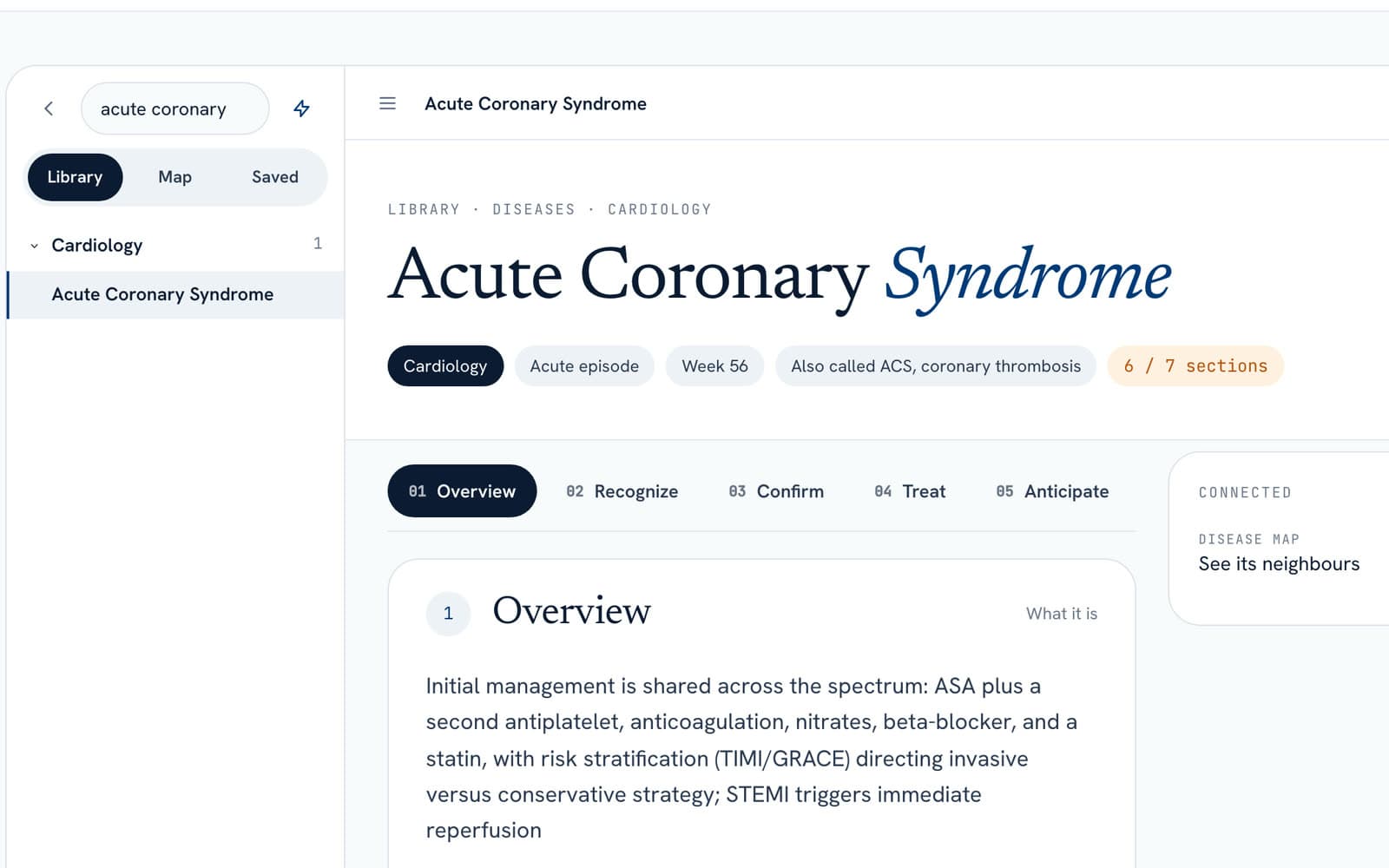
Overview, recognize, confirm, treat and anticipate, with hallmark findings first, so you always know where to look.

The acute coronary syndrome page with its overview, recognize, confirm, treat and anticipate stages

Images and sounds

Read the real thing.

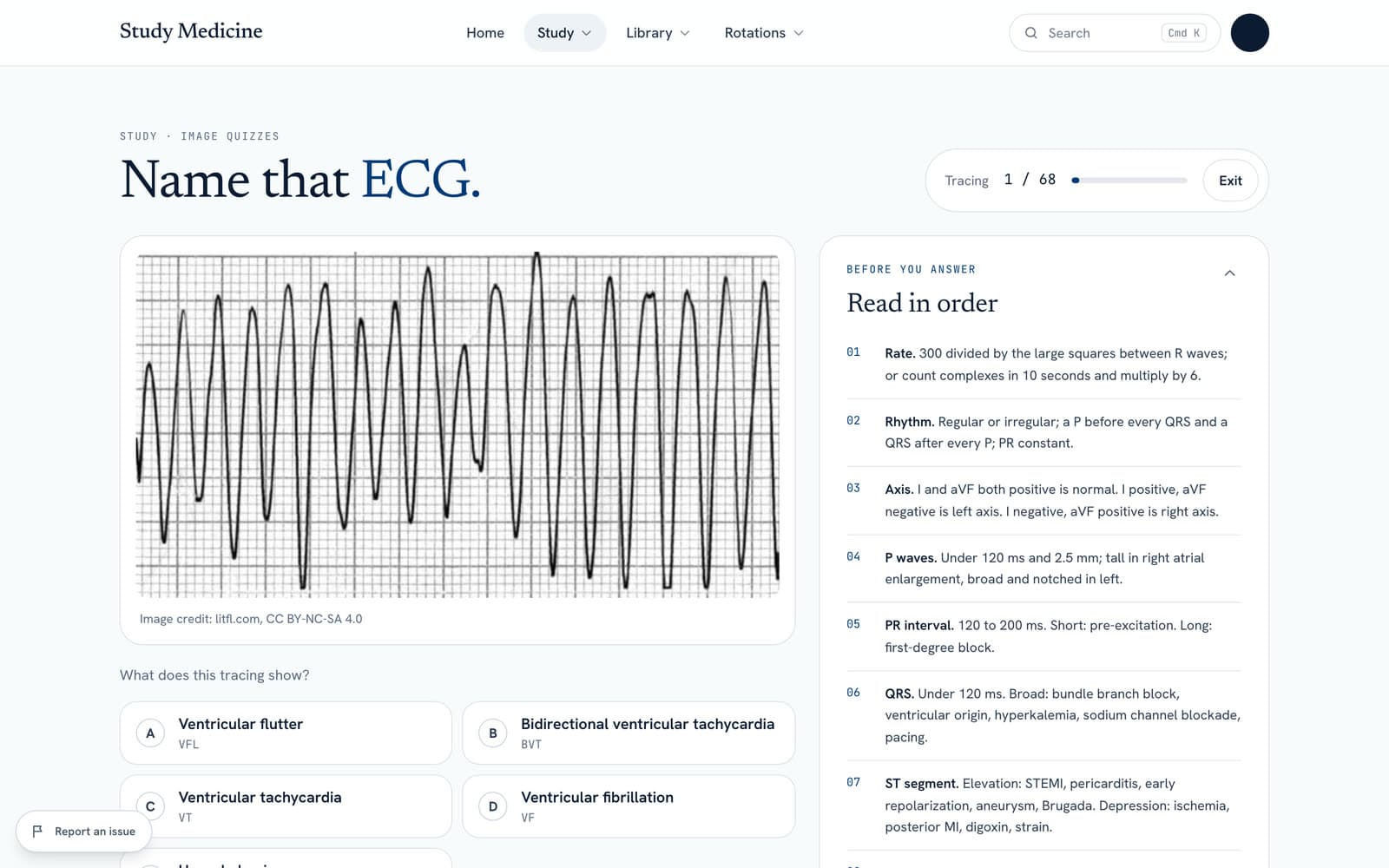
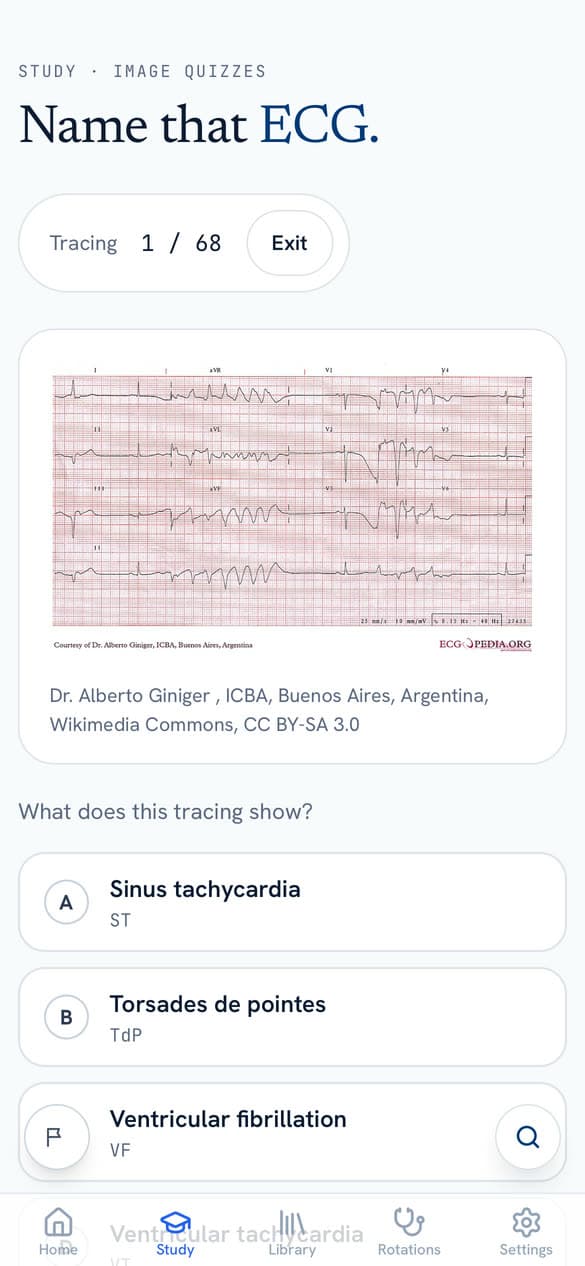
Name the finding on real ECGs, unmarked X-ray films, clinical photos across skin tones, fundus and otoscopy images and heart sound recordings.

The ECG quiz showing a rhythm strip with a read-in-order checklist beside it

OSCE stations

Every station, checklist first.

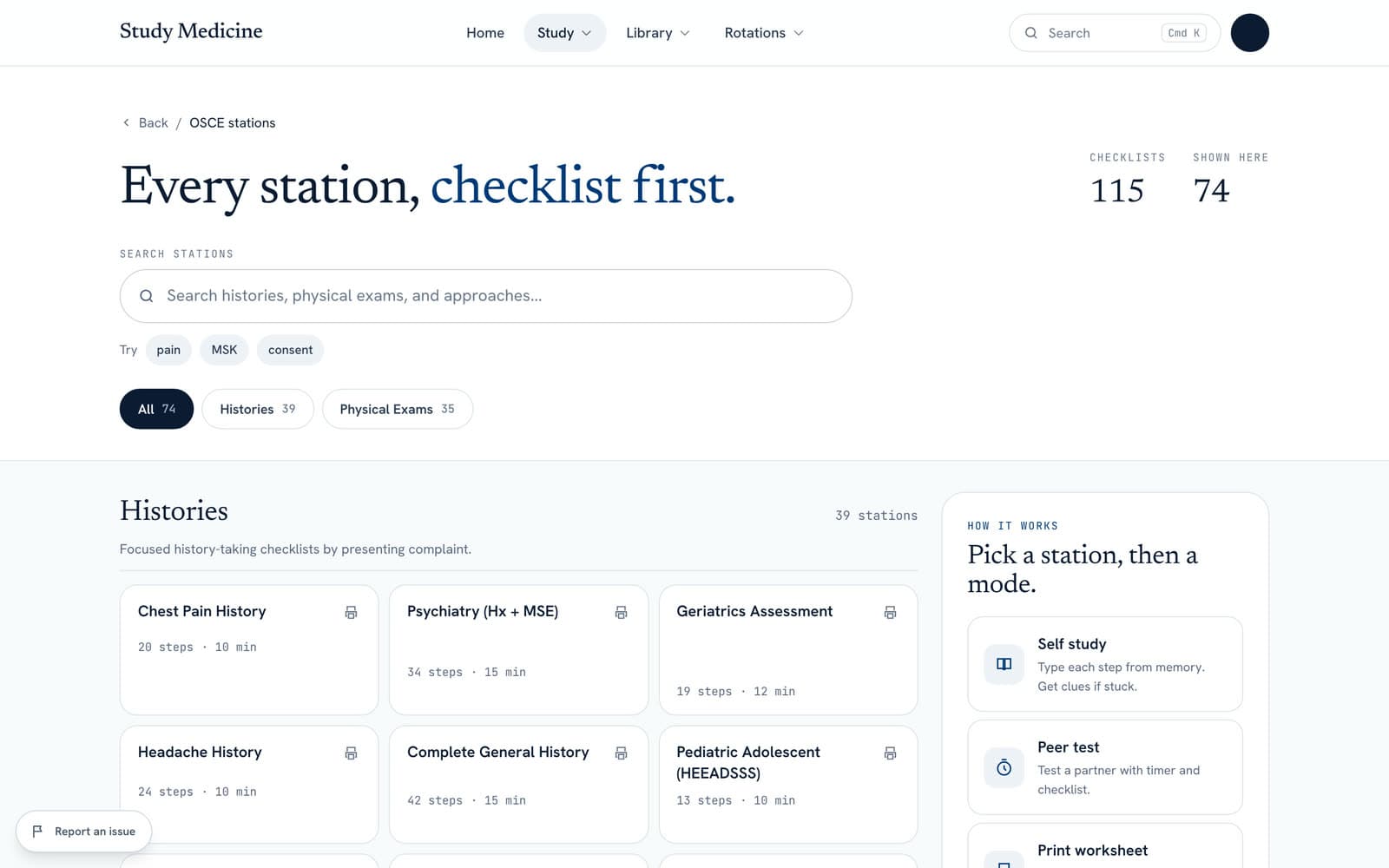
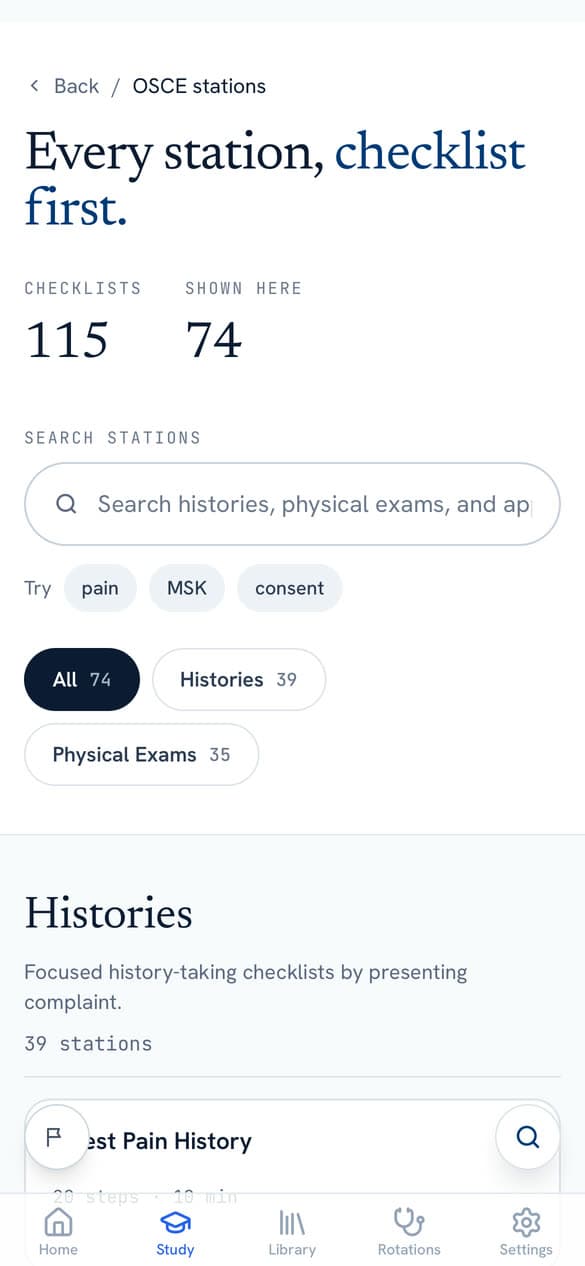
Histories, physical exams and acute approaches for self-study, peer testing against the clock or a printable worksheet.

The OSCE stations page listing history checklists such as chest pain and headache

Study modes

Every way to practise.

  • MCQ practice

    Over 4,400 clinical vignette questions organized by curriculum week, organ system or another school's blocks, each with an explanation for every option and how other students answered.

  • Exam mode

    Timed mixed blocks of MCQs, hallmark matching and reasoning cases, with a full debrief after you finish.

  • Disease quiz

    Name the condition from its key findings, then the next investigation, the likely diagnosis and the diagnostic criteria.

  • Differentials quiz and approach trainer

    Recall every diagnosis on a presenting complaint's differential, and work clinical approaches step by step.

  • OSCE stations

    Histories, physical exams and acute approaches as checklists for self-study, peer testing against the clock, or printable worksheets.

  • Image and sound quizzes

    Real ECGs, chest and bone X-rays, clinical skin photos across skin tones, fundus and otoscopy images, and heart sound recordings.

  • Drug quiz

    Mechanisms, indications, contraindications and side effects, one drug and one component at a time.

Reference library

Everything you reach for, one search away.

Plus an antibiotic coverage reference by bug and by drug, a medical abbreviation glossary, and curated pages for eleven clerkship rotations: internal medicine, surgery, pediatrics, obstetrics and gynecology, psychiatry, family medicine, emergency medicine, anesthesia, ophthalmology, dermatology and radiology.

  • 758
    Diseases
  • 345
    Differential diagnoses
  • 289
    Drugs (therapy cards)
  • 115
    OSCE checklists
  • 751
    ECG images
  • 265
    X-ray films
  • 492
    Eye and ENT images
  • 787
    Dermatology photos
  • 27
    Heart sound recordings
  • 96
    Clinical calculators

Questions

Good to know.

Is Study Medicine free?

Yes. Every study mode and library is free to use with a free account.

Who is it for?

Medical students in pre-clerkship and clerkship. Questions can be organized by UBC curriculum week, by field of medicine, by the Medical Council of Canada clinical presentations, or by another school's blocks.

Who makes it?

It is built and maintained by medical students at the University of British Columbia.

Where does the content come from?

Questions are written with AI assistance and refined using student feedback and item statistics. Reference content is checked against standard clinical references. It is a study aid, not clinical advice; always verify against current guidelines.

Is there an app?

Yes. Study Medicine runs in any browser and as an iPhone app on the App Store.

Your next hour of studying, sorted.

Free on the web and on iPhone.